

Most advice on hotel upselling focuses on the booking and the days before arrival: room upgrades, early check-in, a bottle of prosecco on arrival. That matters. But it covers only the start of the stay.
The rest of the stay is where guests are hungry, tired, relaxed and curious, and where a lot of ancillary revenue is quietly lost. Usually guests aren’t saying no. Buying is just too hard: the room service line is busy, the paper folder is out of date, or the guest never found out the spa had a free slot at 4pm.
This guide covers the in-stay half of ancillary revenue: what to offer, when to offer it, and how to let guests buy from their own phone with no app to download.
What counts as hotel ancillary revenue
Ancillary revenue is everything a hotel earns beyond the room rate. Typical sources include:
- Food and beverage: restaurant, bar, room service and in-room dining, pool and beach service
- Spa and wellness: treatments, packages, day passes
- Activities and experiences: tours, classes, excursions
- Rentals: cars, bikes, beach umbrellas and sunbeds
- Room-related extras: upgrades, late checkout, early check-in
- Packages and bundles: dinner with wine, spa with brunch
For many properties these extras make the difference between a good month and a great one. Unlike room revenue, they don’t depend on selling more nights. They depend on serving the guests you already have better.
Why most hotels leave in-stay revenue on the table
Most hotels don’t lose in-stay revenue for lack of offers. They lose it to friction.
- The phone line is busy. A guest who wants a club sandwich at 10pm calls room service, waits, gives up and opens a delivery app instead.
- The information is outdated or invisible. A printed folder in a drawer can’t show today’s spa availability or tonight’s chef’s special. Most guests never open it.
- Offers arrive at the wrong time. An upgrade offer at booking is useful. An offer for dinner at the moment the guest is wondering where to eat is far more likely to convert.
- There’s no data. If orders are taken by phone and written on paper, you can’t see what guests looked at but didn’t buy, which offers work, or when demand peaks.
Remove the friction and the same guests spend more, without any extra pressure from staff.
9 in-stay upsells guests will buy from their phone
1. Room service and in-room dining
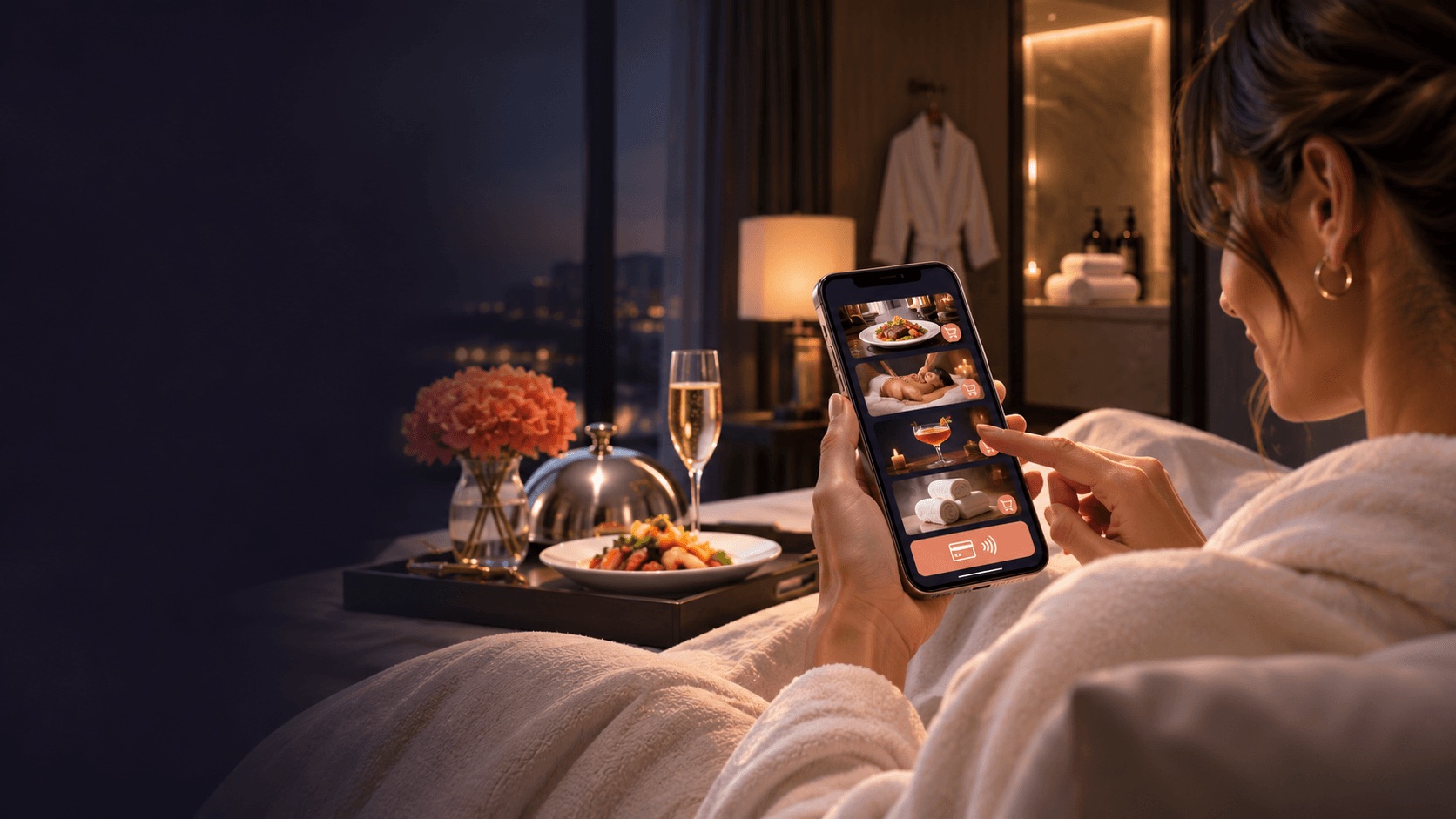
Room service is the classic in-stay upsell and the one most hurt by phone ordering. With digital room service ordering, guests scan a QR code or open a link, browse the menu with photos, choose modifiers and order. The order goes straight to the kitchen. Photos and clear add-ons (sides, drinks, desserts) lift the average order value without anyone having to “sell”.
2. Spa treatments and packages
Spa capacity is perishable: an empty 3pm slot is gone at 3:01. When guests can see real availability and book a treatment or therapist from their phone, any time of day, more slots get filled. TouchMenu’s spa bookings module does this. At Belchin Garden, the general manager reported that the hotel “doubled the revenue from SPA services within the first month” after integrating the SPA management module (read the story).
3. Restaurant reservations
The à la carte restaurant is often fully booked by phone on some nights and half empty on others. Online reservations with live time slots spread demand and capture guests who would never pick up the phone. See rentals and reservations.
4. Rentals: cars, bikes, beach umbrellas
Resort guests rent things. Let them reserve a car, a bike or a beach umbrella from their phone, see what’s available, and get a booking confirmation they can show on arrival.
5. Experiences and local tours
Boat trips, cooking classes, wine tastings, guided walks. Guests want these, but they often book them through third parties because the hotel’s own offer is hard to find. List them in the guest web app with photos, prices and booking.
6. Late checkout and room upgrades
These are usually sold before arrival, but they work during the stay too. A guest enjoying the view on the last morning is a good candidate for late checkout. Show the offer in the guest web app where they’ll see it.
7. Pool, beach and bar ordering by QR
A QR code on each sunbed or table lets guests order drinks and snacks without hunting for a waiter. That means more rounds and fewer walk-outs. See how QR codes work across outlets.
8. Bundles
Pair what naturally goes together: dinner with a wine pairing, a massage with brunch, a family pool day with lunch. Bundles raise order value and make the decision simpler for the guest.
9. AI concierge suggestions in conversation
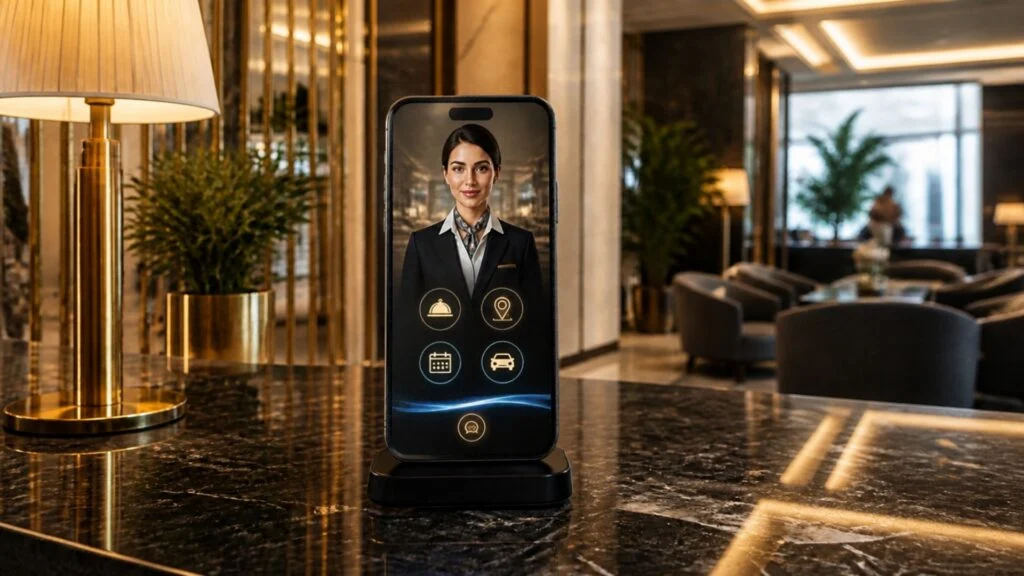
When a guest asks “where should we eat tonight?”, that’s a sales moment. The TouchBot AI concierge answers from the hotel’s own information and can help the guest book or order on the spot, in their own language. More on that below.
Bonus: post-stay offers. After checkout, a thank-you message with a direct-booking offer for the next stay turns a good experience into repeat revenue. See pre-arrival and post-stay messaging.
Timing: pre-arrival, in-stay and post-stay offers
The right offer depends on where the guest is in their stay.
| Stage | What to offer | Channel |
|---|---|---|
| Pre-arrival | Room upgrade, early check-in, spa slot, dinner reservation, airport transfer | Pre-arrival message with a link to the guest web app |
| Arrival day | Welcome drink, room service, dinner table for tonight | Guest web app via QR code in the room and lobby |
| During the stay | Spa, experiences, rentals, pool and bar ordering, bundles | Guest web app, QR codes at outlets, AI concierge |
| Last day | Late checkout, brunch, spa before departure | Guest web app or a short in-stay message |
| Post-stay | Return-visit offer, direct-booking incentive | Post-stay message with feedback request |
The principle: make the offer when the need is real, and make buying a two-tap job.
How AI turns guest questions into bookings
Guest questions are often purchase intent in disguise. “Is the spa open tomorrow?” means “I’m thinking of booking a treatment.” “Do you have vegan options?” means “I’m about to order.”
Industry data supports this. According to a Canary Technologies study of more than 10 million guest conversations, nearly two-thirds (65%) included a request beyond information, and 45% of those requests were revenue-generating, such as bookings.
That’s why an AI concierge should do things, not just answer. With TouchBot, a guest who asks about dinner can be guided to reserve a table or order room service in the same conversation, at any hour and in their own language. A question that used to cost a front-desk phone call now ends in a booking.
Learn more about AI for hotels.
What to measure
You can’t grow what you don’t measure. Track these:
- Ancillary revenue per occupied room. The headline number, comparable across months and properties.
- Conversion by offer. Which upsells guests view and which they buy.
- Average order value for room service and F&B.
- Spa and restaurant utilisation: how many available slots get booked.
- Response time on orders and requests. Slow delivery kills repeat orders.
- Peak times. When guests order, so you can staff and time offers accordingly.
TouchMenu’s stats and reports cover sales, order volumes and trends, best sellers and slow movers, and guest usage during the stay.
Choosing hotel upselling software: a checklist
If you’re comparing tools, check these points:
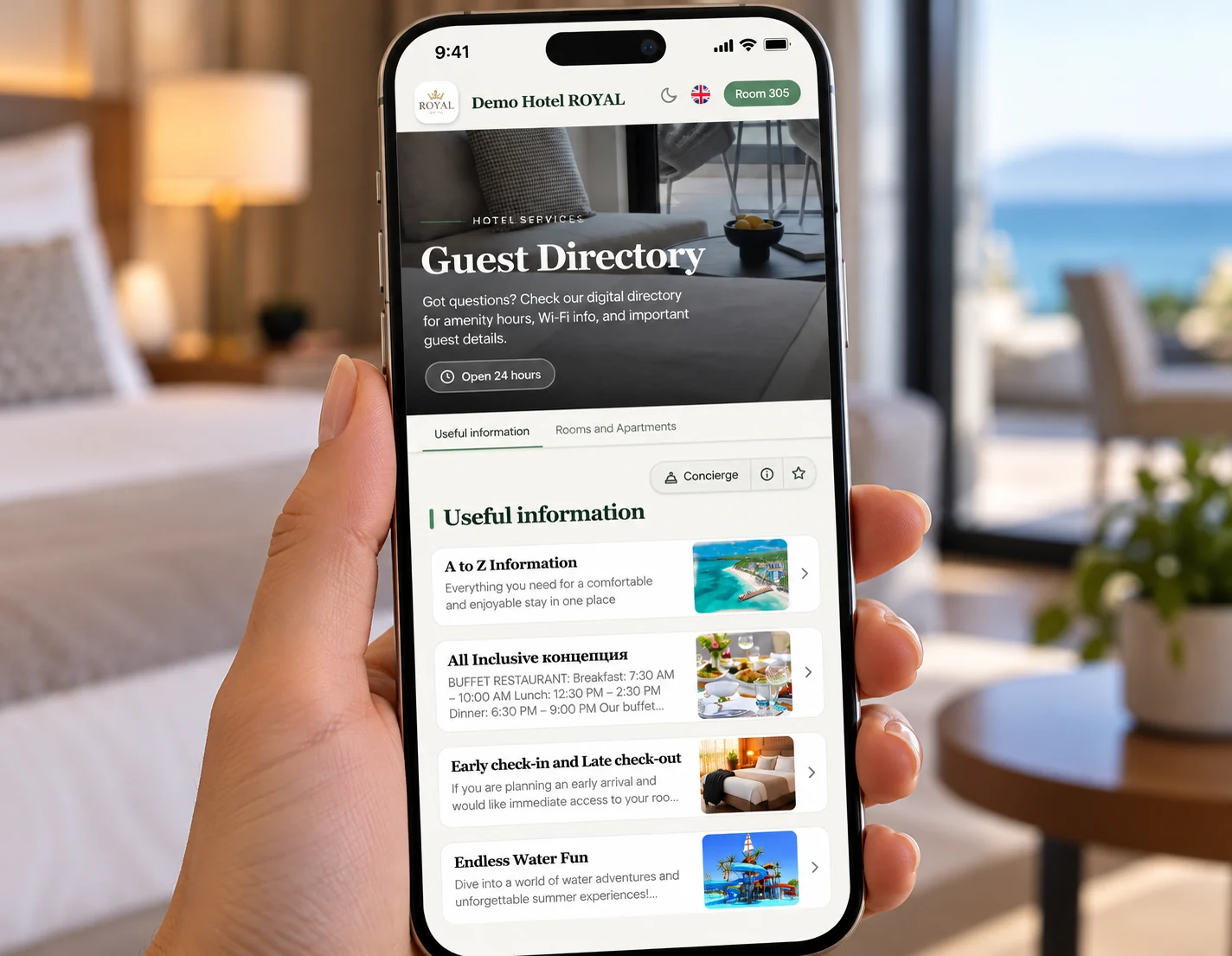
- No app download. Guests won’t install an app for a three-night stay. A web app opened by QR code or link gets used.
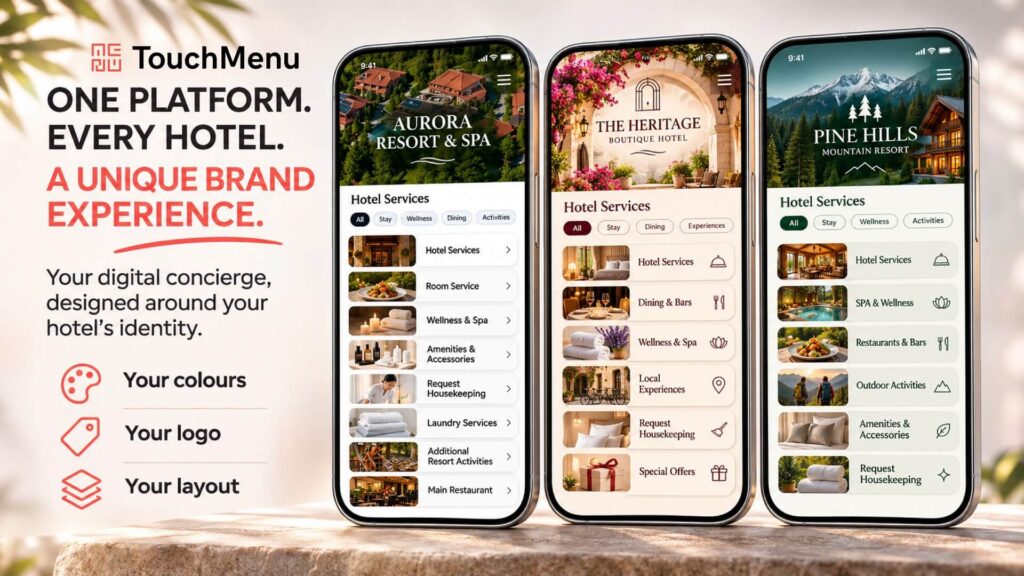
- One place for everything. F&B, room service, spa, restaurant reservations, rentals and experiences in one guest-facing platform, not five separate links.
- Payments and charge to room. Guests should be able to pay by card or mobile wallet, or charge to their room. Charge to room requires a PMS integration: TouchMenu integrates with Mews and Clock PMS today, with more integrations coming soon. See payments.
- The staff side. Every order and booking needs to reach the right team quickly. With ServiceHub, requests become tasks that staff claim and complete from their phones, with response times measured.
- Multilingual. International guests buy more when they can read the menu in their language.
- Reporting. You need to see what sells, what doesn’t and when.
- AI that acts. An AI concierge that can turn a question into a booking or order, not just a chatbot that repeats the FAQ.
TouchMenu brings these together in one guest experience platform, used for around seven years across more than 20,000 hotel rooms in 20+ countries.
Book a demo: see which in-stay upsells your guests could buy from their phone, with no app.
FAQ
What is ancillary revenue in a hotel?
Ancillary revenue is any income a hotel earns beyond the room rate. That includes food and beverage, room service, spa treatments, activities, rentals, parking, late checkout and room upgrades.
What are the best upselling ideas for small hotels?
Start with what you already sell but make it easier to buy: breakfast in the room, local experiences, late checkout, bundles such as dinner with wine, and bike or car rental. Small hotels gain most from removing friction, for example by letting guests order and book from their phone instead of finding a staff member.
When is the best time to upsell to hotel guests?
When the need is real. Upgrades and early check-in work best before arrival. Dining, spa and experiences work best during the stay, close to the moment the guest is deciding. Return-visit offers work best right after checkout.
Do guests need to download an app to buy extras?
Not with TouchMenu. Guests open a web app by scanning a QR code or tapping a link, then order, book and pay in their browser. There’s nothing to install.
How do I charge in-stay purchases to the room?
Charge to room needs a connection between your guest ordering platform and your PMS. TouchMenu supports charge to room with integrated PMSs; Mews and Clock PMS are live today. Guests can also pay directly by card or mobile wallet.